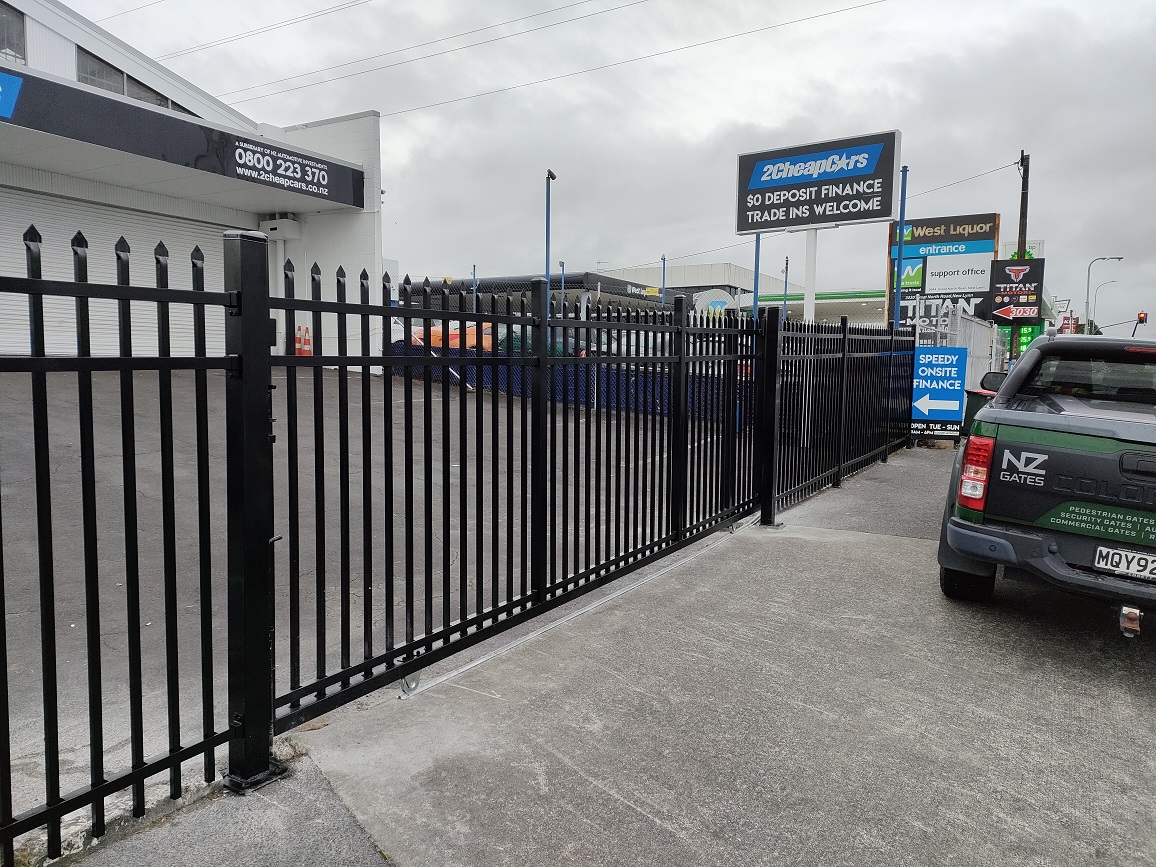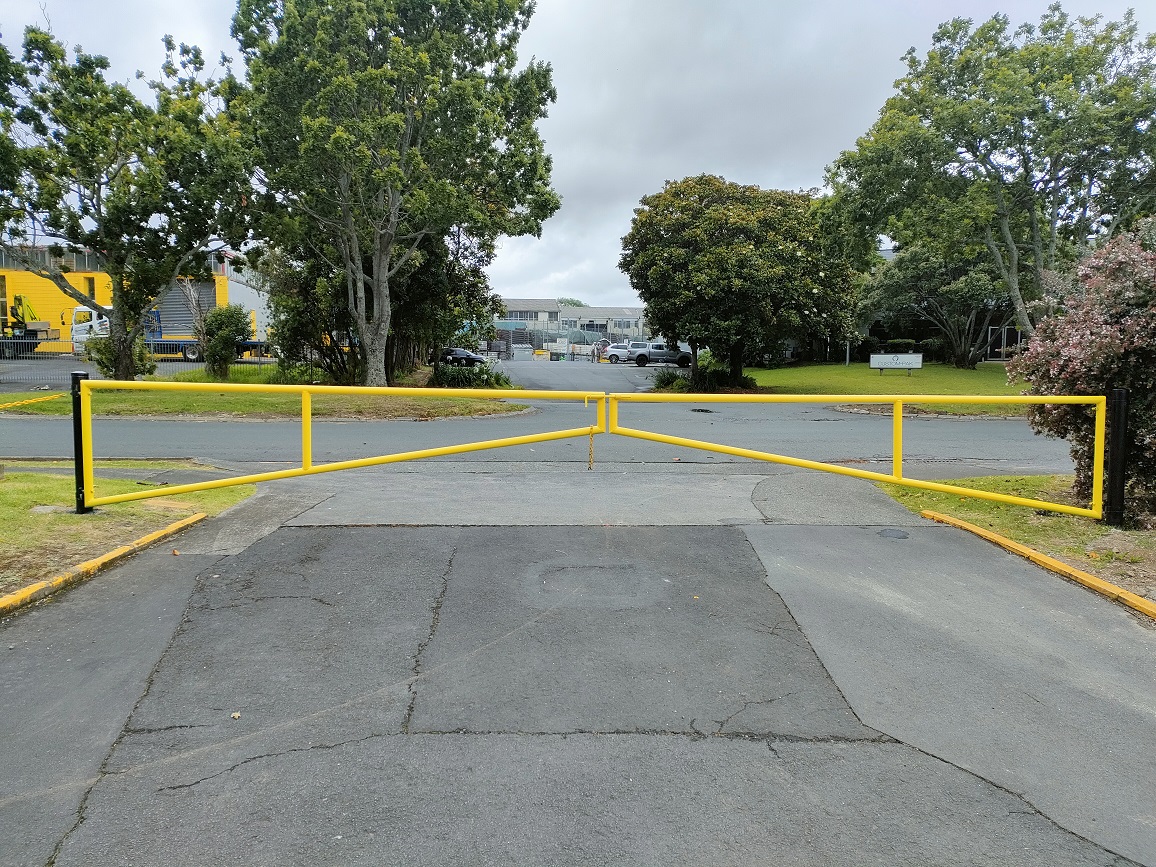
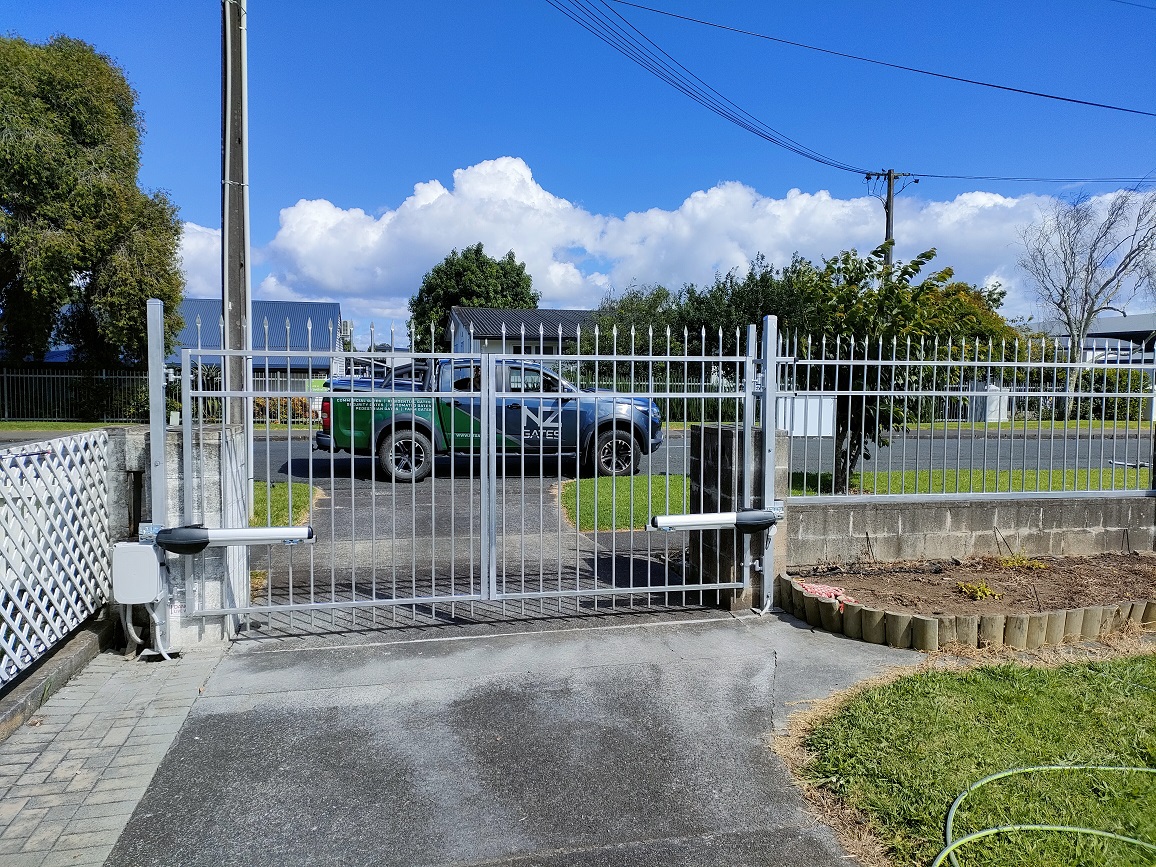
Across Auckland, driveway and perimeter gates have evolved from simple mechanical barriers into intelligent, connected security ecosystems. Whether you are securing a coastal home in Takapuna or Mission Bay, automating a steep cross-lease driveway in Remuera or Titirangi, managing resident access for a multi-unit townhouse development in Mt Eden, or upgrading commercial security in East Tamaki, choosing the right motor architecture and access control hardware determines whether your gate runs effortlessly for 15+ years or suffers from premature burnout and nuisance faults.
In this comprehensive 2026 engineering and buyer's guide, the fabrication and automation specialists at NZ Gates break down everything Auckland property owners, architects, body corporates, and facility managers need to know about specifying, wiring, and installing smart gate automation and access control systems.
Why Smart Gate Automation Has Transformed Property Security in Auckland
Traditional electric gates relied almost entirely on short-range 433MHz fixed-code radio remotes. If a courier arrived while you were at work, a tradesperson needed temporary yard access, or a remote was lost, your only options were leaving the gate unlocked or driving home. Worse still, legacy fixed-code transmitters were vulnerable to frequency cloning.
Modern smart gate automation solves both security and logistics challenges simultaneously:
- Encrypted Rolling-Code & Bi-Directional RF Security: Modern transmitters change their cryptographic key on every button press, preventing code grabbing while confirming gate status (open, closed, or obstructed) back to your handset or phone.
- Anywhere Smartphone & 4G GSM Control: Open your gate for deliveries from anywhere in the world, view live HD video of your entrance, issue time-restricted PIN codes to contractors, and receive instant push alerts if a gate is left open or forced.
- Integrated Battery Backup for Auckland Storms: High-efficiency 24V DC brushless drive systems automatically switch to integrated AGM or lithium-iron-phosphate (LiFePO4) battery power when cyclone or storm outages hit the Vector network.
- Seamless Smart Home & Commercial Integration: Native compatibility with Apple HomeKit (via relay bridges), Google Home, Control4, Hikvision/Dahua IP CCTV, Ajax alarm systems, and commercial Wiegand/OSDP building access networks.
Gate Motor Engineering: 24V Brushless DC vs 230V AC vs Hydraulic Drive Systems
The single most common mistake in Auckland gate installations is selecting a motor based solely on the static weight of the gate leaf while ignoring wind loading, driveway gradient, and daily duty cycle. A solid aluminium slat gate or timber-clad gate acts like a sail when funnelled winds sweep off the Waitematā or Manukau Harbours, multiplying the effective load on the motor gearbox by up to 300%.
Comparing Electric Gate Motor Technologies for Auckland Properties
| Motor Architecture | Voltage & Power | Duty Cycle Rating | Max Gate Weight / Span | Best Auckland Application |
|---|---|---|---|---|
| 24V DC Brushless / Low-Voltage | 230V mains step-down or Solar 24V DC | 50% to 100% (Intensive) | 400kg – 1,500kg / up to 8m | Premium residential homes, multi-unit townhouses, solar lifestyle blocks |
| 230V AC Electromechanical | 230V Single-Phase AC | 30% to 40% (Intermittent) | 600kg – 1,800kg / up to 10m | Standard residential & light commercial sliding/swing gates with low daily cycles |
| 24V / 230V Electro-Hydraulic | 24V DC or 230V AC Hydraulic Pump | 70% to 100% (Heavy Duty) | 800kg – 2,000kg / up to 7m leaf | High-wind coastal swing gates, solid clad panels, apartment complexes |
| 400V 3-Phase / Inverter Industrial | 400V 3-Phase or High-Torque Inverter | 100% Continuous | 2,000kg – 4,000kg+ / up to 20m | Logistics depots, freight yards, industrial cantilever gates |
Sliding Gate Motors: Rack-and-Pinion Precision
For sliding driveway gates, the motor bolts to a reinforced concrete foundation pad beside the opening and drives a toothed pinion gear along a linear rack fixed to the gate's bottom rail.
- Steel-Cored Nylon Rack vs Galvanised Steel Rack: For residential installations in quiet suburbs, NZ Gates specifies heavy-duty glass-reinforced nylon racking with a 10mm internal steel core. It delivers whisper-quiet operation, requires zero grease (which otherwise traps abrasive road grit), and cannot rust. For heavy commercial gates exceeding 800kg, we weld or bolt 30mm x 12mm hot-dip galvanised steel Module-4 racking directly to the structural frame.
- Magnetic vs Mechanical Limit Switches: We strongly recommend non-contact magnetic limit switches over spring-lever mechanical switches. In Auckland's wet winters, mechanical levers can stick or collect spiderwebs and snails, whereas sealed reed or Hall-effect magnetic sensors trigger soft-stop deceleration with millimetre accuracy regardless of weather.
- High-Speed Brushless Operation: Modern high-speed 24V brushless sliding operators achieve travel speeds of 16 to 24 metres per minute—clearing a 4-metre residential driveway in under 12 seconds so you never wait on busy arterial roads.
Swing Gate Actuators: Linear Rams, Articulated Arms & Underground Motors
Swing gates require careful geometric calculation—specifically the 'A' and 'B' hinge-to-bracket offset dimensions—to achieve smooth 90-degree to 110-degree travel and strong mechanical locking leverage in the closed position.
- Linear Worm-Drive & telescopic Rams: The workhorse for steel and aluminium swing gates mounted on standard 100x100mm or 150x150mm steel posts. Sleek, weather-sealed, and highly resistant to wind flex.
- Articulated Cranked-Arm Motors: Essential when gates are hung on wide Schist stone columns, plastered brick piers, or concrete block pillars (common in Remuera, St Heliers, and Coatesville) where the hinge line sits 150mm to 350mm back from the inside face of the pillar.
- Underground IP67 Subterranean Motors: Installed inside marine-grade stainless steel foundation boxes flush with the driveway pavement. Underground motors preserve the clean architectural silhouette of heritage villas and luxury architectural homes with zero visible machinery on the gate leaves.
Smart Access Control Ecosystems: Choosing the Right Entry Hardware
A modern gate is only as convenient as the access control peripherals connected to its main logic board. At NZ Gates, we design multi-layered access architectures tailored to how your family, tenants, staff, and delivery drivers interact with the entrance every day.
2026 Smart Gate Access Control Comparison Matrix
| Access Control System | Core Functionality | Ideal Property Type | Connectivity Needed | Typical Hardware & Install Add-On (NZD) |
|---|---|---|---|---|
| 4G GSM Cellular Gate Module | Call-to-open (Caller ID whitelist), smartphone app, SMS & temporary PINs | Residential, rural lifestyle blocks, body corporate apartments | 4G LTE Nano-SIM (Spark / One NZ / 2degrees) | $850 – $1,450 |
| IP / Wi-Fi Video Intercom | 1080p/2K wide-angle camera, 2-way audio to indoor touchscreen & mobile app | Urban homes, gated driveways, commercial reception entrances | Cat6 Ethernet, 2-Wire bus, or Long-Range Wi-Fi | $1,400 – $2,950 |
| Wireless / Hardwired Digital Keypad | Backlit stainless steel PIN entry for trades, couriers, cleaners & school kids | All residential & commercial properties | Low-voltage 12/24V cable or 433/868MHz RF | $380 – $750 |
| Dual-Channel Ground Induction Loop | Sub-surface electromagnetic loop triggers automatic free-exit when car drives over | Busy residential driveways, apartments, commercial yards | Saw-cut loop in concrete/asphalt wired to loop detector | $650 – $1,250 |
| RFID / HID / Biometric Reader | Encrypted keyfobs, swipe cards, or fingerprint/facial access with audit logs | Commercial offices, apartments, high-security compounds | Wiegand / RS485 OSDP cable to controller | $950 – $2,600 |
| ANPR / LPR License Plate Camera | AI camera reads authorised NZ registration plates on approach for hands-free entry | Multi-resident developments, commercial fleets, luxury estates | PoE Cat6 network cable to NVR/controller | $2,200 – $4,800 |
Deep Dive: 4G GSM Intercoms vs Hardwired IP Video Intercoms
One of the most frequent questions our Auckland estimator team answers is whether to trench a data cable for an IP video intercom or install a 4G cellular intercom at the gate post.
If your gate sits within 25 to 50 metres of the house and we are already trenching 230V or low-voltage power, running a flooded-core Underground Cat6 data cable (or a 2-wire non-polarised bus cable over existing wiring) inside a separate communications conduit gives you rock-solid, zero-subscription HD video and instant app notifications via your home fibre connection.
However, for long driveways (50m to 300m+ in Dairy Flat, Kumeū, Clevedon, or Whitford) or retrofit projects where cutting across established exposed-aggregate concrete is cost-prohibitive, a 4G GSM cellular intercom (such as AES Global Praetorian or Centurion G-Ultra) is unbeatable. Using a low-cost SIM plan ($10–$20/month), visitors press the call button at the gate and your mobile phone rings via cellular voice or data app—even if you are on holiday in Queenstown. You can also register up to 100+ family and tenant phone numbers for free 'dial-to-open' caller-ID recognition.
Solving Auckland's Toughest Site Challenges: Sloped Driveways & Coastal Salt Air
Auckland's volcanic topography and twin-harbour geography create site challenges that off-the-shelf kitset gate openers simply cannot survive.
Engineering Automation for Sloped and Steep Driveways
Many residential sections across the North Shore, Waitākere, Orakei, and Hillsborough slope sharply up or down from the road reserve:
- Driveways Sloping Upward Behind the Gate: Standard inward-swinging gates will bottom out against the rising asphalt after moving only 15 degrees. We solve this either by installing a sliding gate across the front boundary, fabricating custom rising-butt hinges that lift the gate leaf on an inclined plane as it opens, or—where boundary setbacks permit—configuring inward-sliding telescopic panels.
- Sliding Gates on Cross-Slopes (Raked / Inclined Tracks): When the boundary itself runs uphill or downhill along the footpath, sliding a gate downhill means gravity pulls the leaf during closing and fights the motor during opening. For gradients up to 1:12 (8%), we step or rake the top profile of the gate to match the fence line, upsize the motor torque rating by 50–100%, and specify self-locking worm-drive gearboxes with electromechanical brakes so the gate cannot free-wheel if manually disengaged on an incline.
Marine-Grade Corrosion Protection for Coastal Suburbs
If your property is in Devonport, Takapuna, Bucklands Beach, Maraetai, Pt Chevalier, or Waiheke Island, airborne marine chlorides will corrode standard mild steel and cheap die-cast motor housings within 24 months.
- Structural Frame Specification: We recommend marine-grade aluminium gates (6063-T5 / 6061-T6 alloy) chromate pre-treated and powder-coated to Dulux Duralloy or Duratec marine specifications, or structural steel hot-dip galvanised to AS/NZS 4680 after all welding and drilling are completed.
- Electronics & Pest Sealing (The 'Auckland Ant & Gecko' Factor): Warm transformer housings attract Argentine ants, earwigs, and small geckos during wet Auckland winters, causing catastrophic short-circuits across 230V tracks on the PCB. NZ Gates seals all cable entry glands with closed-cell foam and silicone putty, utilizes IP66 polycarbonate enclosures with breathable Gore-Tex pressure vents, and selects logic boards treated with tropicalized conformal lacquer.
2026 Smart Gate Automation & Installation Costs in Auckland (NZD)
Every property is unique, but transparent benchmark pricing helps homeowners and commercial managers budget accurately. For a broader overview of manual and automated gate fabrication costs, see our dedicated Auckland Gate Prices Guide.
| Project Scope & Specification | Gate & Motor Hardware Included | Typical Installed Price Range (NZD incl. GST) |
|---|---|---|
| Retrofit Automation Only (Existing Gate) | Heavy-duty 24V sliding motor (with 4m nylon rack) OR twin linear swing arms, 2x encrypted remotes, wireless keypad, safety photocells (excludes 230V mains trenching) | $2,200 – $3,800 |
| Custom Automated Single Sliding Gate (3.5m–4.5m) | Powder-coated aluminium slat or steel frame gate, concrete post & track pad, 24V brushless motor with battery backup, 2x remotes, keypad & safety beams | $5,200 – $8,500 |
| Custom Automated Double Swing Gate (3.6m–5.0m) | Pair of custom aluminium or steel swing leaves, heavy-duty posts, twin 24V linear or articulated actuators, safety beams, remotes & smart Wi-Fi/GSM control | $5,800 – $9,800 |
| Architectural Underground Swing or Cantilever System | Trackless residential cantilever sliding gate OR double swing gate with IP67 subterranean motors, HD video intercom & free-exit induction loop | $9,500 – $15,500 |
| Solar-Powered Rural / Lifestyle Block Gate Package | 4.0m–5.0m rural entrance or timber-clad gate, 30W–80W monocrystalline solar panel, deep-cycle battery bank, low-draw 24V motor & 4G GSM opener | $4,800 – $8,200 |
| Commercial / Body Corporate High-Cycle Smart Gate | Heavy-duty steel/aluminium security gate, 100% duty-cycle motor, dual-height safety beams, resistive safety edges, GSM/RFID multi-tenant access & FENZ emergency override | $10,500 – $22,000+ |
New Zealand Electrical Regulations, Council Consent & Safety Standards
Installing an automated gate involves both civil structure rules and strict electrical and machinery safety law in New Zealand. Cutting corners exposes property owners and body corporates to voided home insurance and personal liability.
- AS/NZS 3000 Electrical Compliance: Any 230V mains cabling run from your house switchboard or distribution board to the gate motor must be protected by a dedicated 30mA RCD (Residual Current Device), buried at least 500mm–600mm underground inside heavy-duty orange HD electrical conduit with warning tape laid above, and signed off with an official Certificate of Compliance (CoC) by a registered New Zealand electrician. Alternatively, for low-voltage solar or step-down transformer systems where a 24V/36V extra-low-voltage (ELV) feed is run from an indoor plug-in power supply, trenching requirements are far simpler and more economical.
- Auckland Unitary Plan & Footpath Rules: As detailed in our Auckland Gate Consent Guide, residential gates up to 2.0 metres high do not require a building consent, provided they are constructed entirely within your legal property boundary. Crucially, automated swing gates must never swing outward over a public Auckland Transport berm or footpath, and drivers must have clear visibility of pedestrians on the footpath when exiting.
- Mandatory Obstacle Detection & Anti-Crushing Protection: An automated gate must never rely solely on motor stall current to detect a child, pet, or vehicle. NZ Gates installs monitored infrared photoelectric safety beams (PE beams) across the gate threshold on every automated project. For commercial, apartment, and school installations (see our Industrial Gates Compliance Guide), we also fit active resistive safety edges to eliminate shearing and drawing-in pinch zones.
- Fire & Emergency NZ (FENZ) Access: For gated subdivisions, shared right-of-way driveways serving multiple dwellings, and commercial compounds, we integrate FENZ-approved emergency key switches, break-glass releases, or SOS siren-activated openers so fire appliances and St John ambulances never face delayed entry.
Pre-Installation Checklist for Auckland Property Owners
Before booking your on-site measure and quote, reviewing these five site factors will help you get the most accurate design and price:
- Measure your clear driveway opening width between posts or boundary walls, plus the available side run-back space along the fence line (a 4.0m sliding gate requires at least 4.5m to 4.8m of clear side run-back; if you only have 2.6m, a bi-parting telescopic sliding gate or inward swing gate is required).
- Check where your nearest 230V power supply is located (garage sub-board, exterior waterproof socket, or garden pillar) and note whether concrete paths or retaining walls sit between the power source and the gate post.
- Decide how couriers, visitors, and tradespeople will enter—whether you want a separate pedestrian gate with a digital smart lock alongside your driveway gate, or a pedestrian 'partial-open' mode programmed into your main vehicle gate.
- Check Wi-Fi signal strength at your front boundary using your smartphone; if Wi-Fi is weak (-75 dBm or worse), opt for a 4G GSM module or hardwired intercom rather than a Wi-Fi-only relay.
- Plan for ongoing reliability with an annual checkup—see our Gate Maintenance Auckland service plans or our Gate Repair Auckland team if you have an existing motor that needs upgrading.
Get a Free Smart Gate Automation Assessment in Auckland
With over 30 years of local fabrication and automation expertise across Greater Auckland, NZ Gates designs, builds, and installs complete automated gate systems engineered specifically for your driveway geometry, architectural style, and security requirements.
Call our Auckland specialists today on 021 022 75499 or request a free on-site consultation and quote to upgrade your property with reliable, smart gate automation.